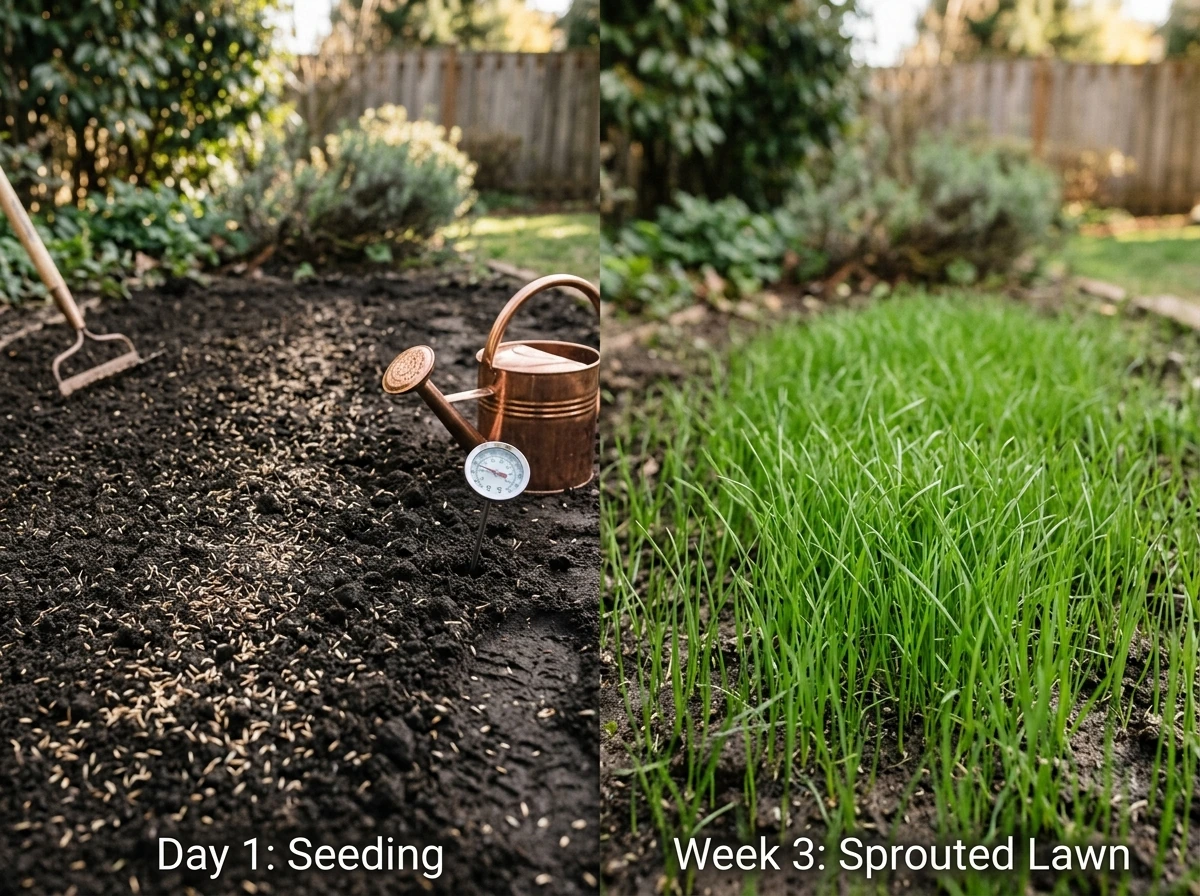
Most lawn seed takes between 5 and 30 days to germinate, depending on the grass type, which answers the question of <how long does it take to grow sod from seed>. After that first sprout appears, you're looking at another 4 to 8 weeks before the lawn is mowable, and anywhere from 2 to 6 months before you'd call it a full, established lawn. That wide range is real, and it's not a cop-out. The difference between a lawn that fills in beautifully by summer and one that's still patchy in fall usually comes down to a handful of controllable factors, most of which I'll walk you through here.
How Long Does Lawn Seed Take to Grow Full Timeline
Marcus Henley
24 Mar 2026
The realistic timeline from seeding to full lawn
Here's the honest answer most people are looking for: if you seed under decent conditions in the right season, you'll see sprouts within one to three weeks, a mowable lawn by about four to six weeks, and reasonably full coverage somewhere between two and six months. The big variable is grass type, which I'll cover in detail below. But for a quick mental map, this is how the timeline generally unfolds:
- Days 5–21: First germination and visible sprouts (varies widely by species)
- Week 3–6: Seedlings are established enough to handle light foot traffic
- Week 4–8: Grass reaches mowing height (around 3–4 inches); first mow happens here
- Month 2–6: Lawn fills in, thickens, and approaches near-full coverage
- Month 6–12+: Full density and mature root system (especially for slow starters like Kentucky bluegrass)
A healthy, mature lawn should eventually reach around six to eight turf plants per square inch. If you're nowhere near that density by month three, something in the establishment process went sideways, and there's usually a fixable reason.
What actually changes how fast your seed grows
Germination isn't a timer you set and forget. It responds directly to conditions, and small changes in those conditions can shave days off your timeline or add weeks to it. These are the factors that matter most.
Soil temperature
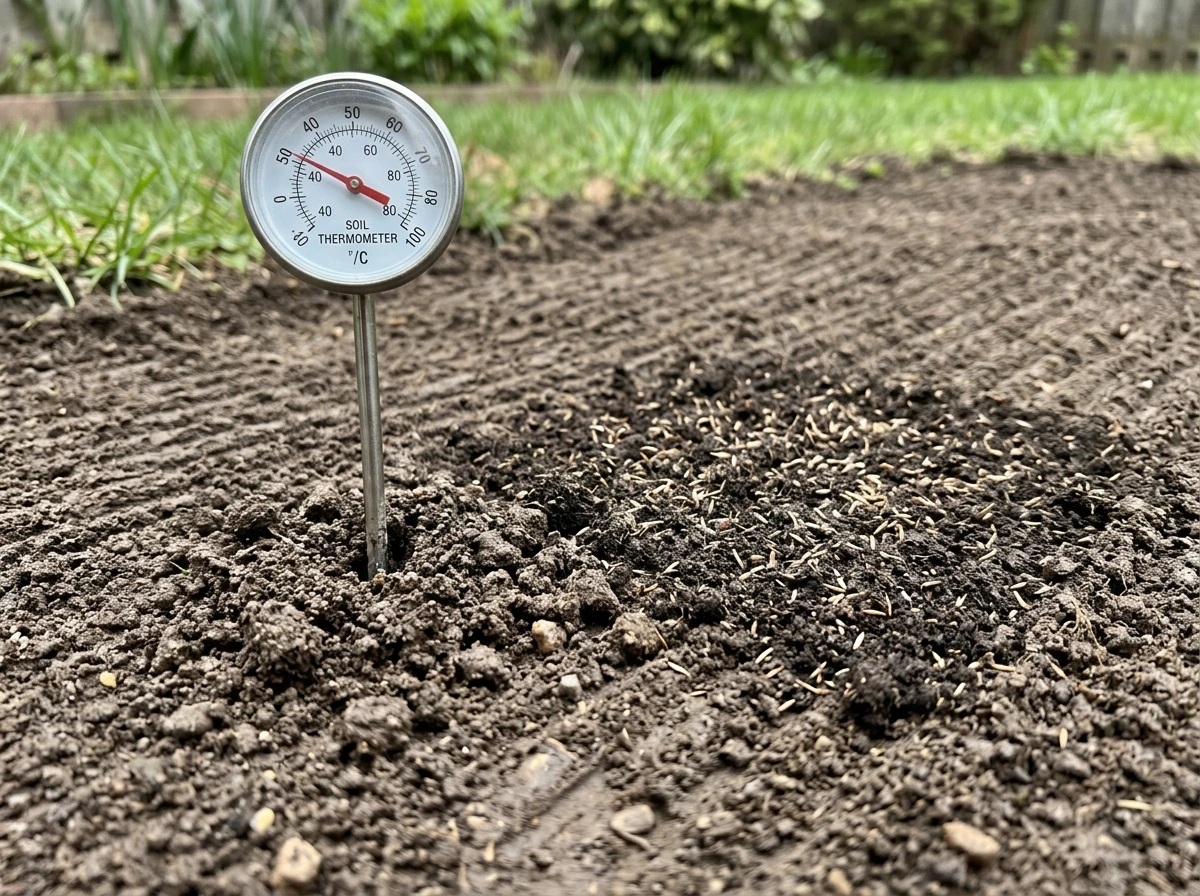
This is the single biggest lever. Most cool-season grasses want soil temperatures above 50°F to germinate at all, and they really get going between 59°F and 86°F. Warm-season grasses need even warmer soil, generally 65°F and above. Seeding into cold soil doesn't just slow things down; it can mean almost no germination at all. I've watched people seed in early spring hoping for a head start, only to see nothing happen for weeks because the soil was still sitting at 45°F. A cheap soil thermometer takes the guesswork out of it.
Moisture management
Getting moisture right is genuinely the hardest part for most people. The goal is moist seedbed, not wet, not dry. The seed needs to absorb water (a process called imbibition) to kick off germination, and if it dries out even once during that window, you can lose it. On hot or windy days, you may need two or three light waterings just to keep the surface from crusting. At the same time, waterlogged soil causes its own problems, including disease and oxygen deprivation. The sweet spot is consistent surface moisture without ponding or runoff. If spring rains are doing the job, you can water more conservatively. If you're seeding in late summer heat, you'll need to be diligent about it.
Season and timing
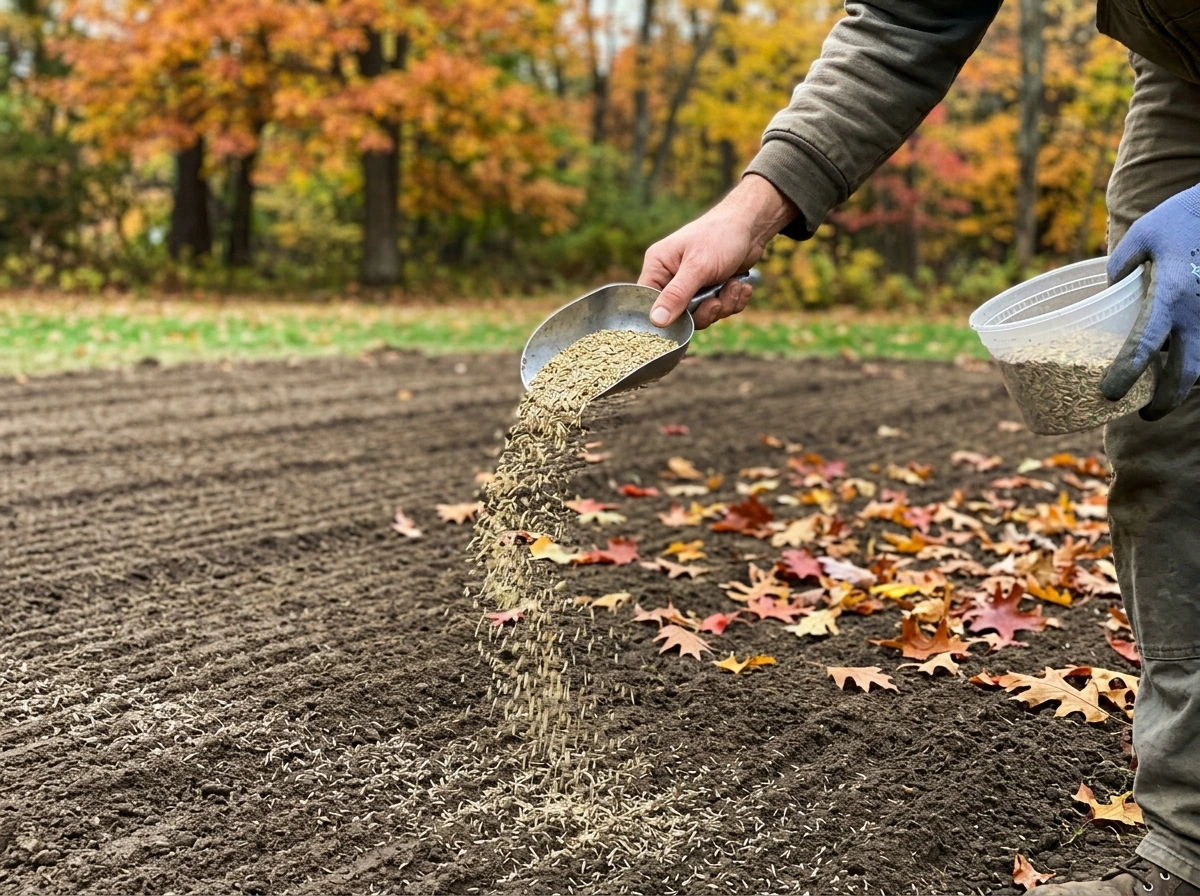
For cool-season grasses, late summer to early fall (late August through September in most regions) is the best window. Soil is still warm from summer, which accelerates germination, and seedlings get two to three months of favorable temperatures before winter sets in. Research backs this up: autumn seedings on or before mid-October have yielded over 70% turf cover the following summer for species like Kentucky bluegrass, perennial ryegrass, and tall fescue. Spring seeding works too, but you're racing against summer heat before the lawn is fully established. Warm-season grasses are the opposite: seed them in late spring to early summer when soil temperatures are reliably warm.
Soil preparation and seed depth
Loose, well-prepared soil with amendments thoroughly mixed in gives roots somewhere to go from day one. Poor seedbed preparation is probably the most underrated reason for slow, patchy establishment. Seed depth also matters more than people think: the ideal seeding depth is about a quarter inch. Too shallow and the seed dries out easily; too deep and the seedling can't push through. After seeding, a light roll with an empty water-ballast roller improves seed-to-soil contact without burying the seed, and that contact directly affects germination speed.
Seed quality and hull status
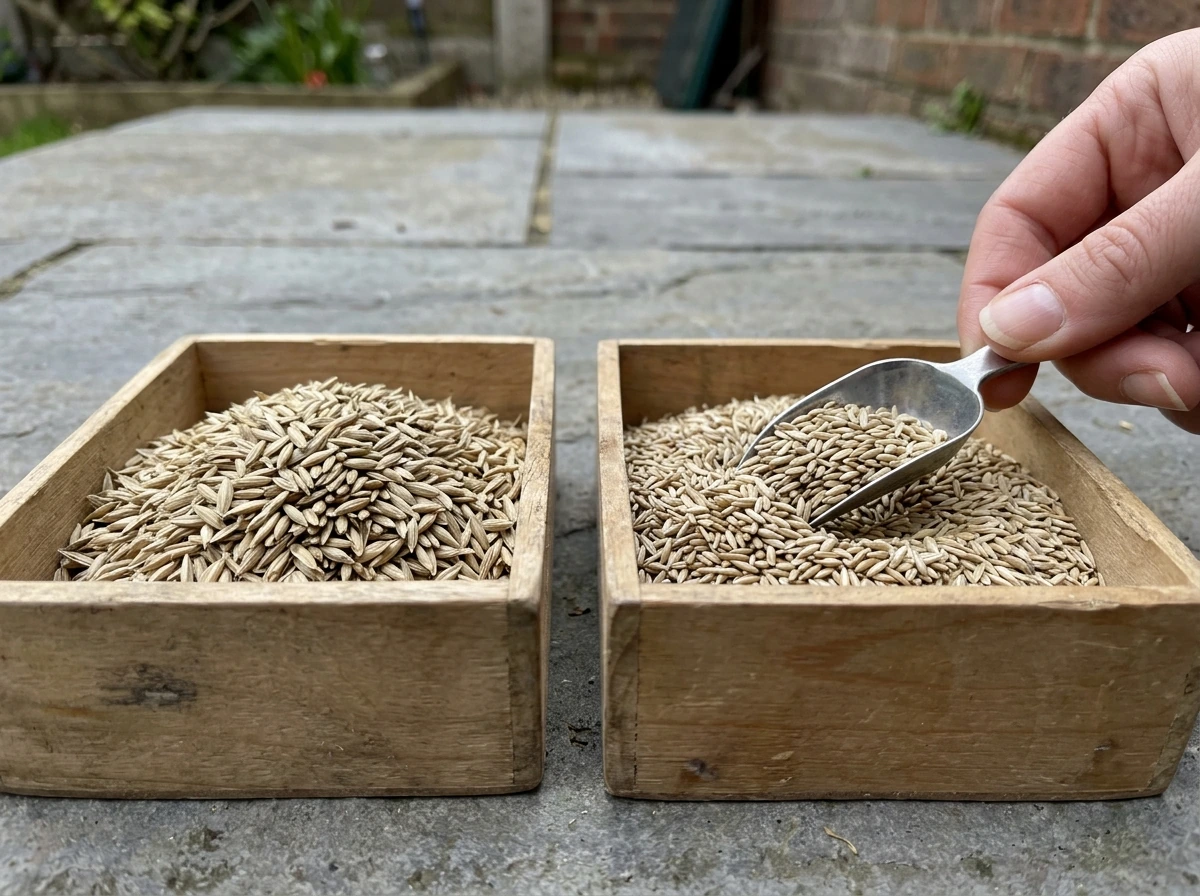
Hulled seed (where the outer coating has been removed) germinates faster than unhulled seed. Unhulled seed can take 14 to 21 days longer to show sprouts because moisture has to penetrate that outer hull first. If you're buying seed and timeline matters, check the label. Older seed also has lower germination rates, so a bag that's been sitting in a garage for two years may perform well below its stated germination percentage.
Growth milestones: what to watch for week by week
Knowing what's normal at each stage helps you avoid panicking too early or missing a real problem too late. Here's how establishment typically progresses under good conditions.
First sprouts (days 5–21)
This is when you're checking the lawn every morning. Fast-germinating grasses like perennial ryegrass can show tiny green shoots in as few as five to seven days. Slower types like Kentucky bluegrass might make you wait two to three weeks. If you've seeded a blend, you'll often see the ryegrass pop first, followed by the other species over the next week or two. That's completely normal. Don't judge a blend seeding by when the first species emerges.
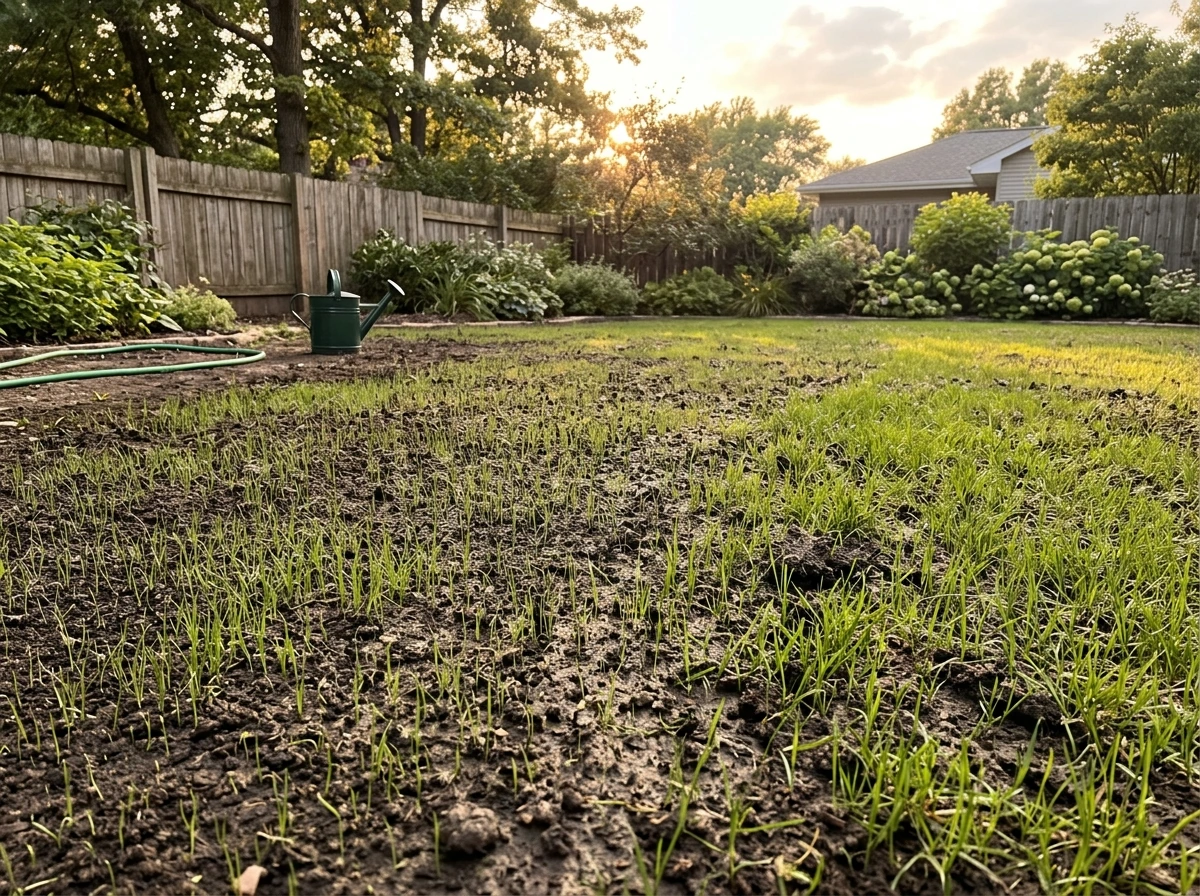
Seedling establishment (weeks 2–4)
Seedlings are fragile. This is the window where drying out, heavy rain, foot traffic, or disease can set you back significantly. Keep the surface moist with frequent light waterings, as much as two to three times a day if it's dry and warm. Stay off the lawn as much as possible. By the end of week four, a well-seeded perennial ryegrass lawn should already look like a recognizable lawn.
First mow (weeks 4–8)
Don't mow by the calendar. Mow when the grass reaches about 3 to 4 inches tall, which usually happens somewhere between four and eight weeks after seeding depending on species and conditions. Before you mow, walk the lawn and make sure the soil is firm enough to support the mower without ruts. Mowing too early on soft soil can pull seedlings right out of the ground. Keep the blade high on that first cut and never take off more than a third of the blade height at once.
Near-full coverage (months 2–6)
By month two or three, a well-established cool-season lawn seeded in fall should show strong coverage with most bare spots filled in. Full density, including mature root depth and plant count approaching that six to eight plants per square inch benchmark, takes longer. For fast species like ryegrass, you might be close to full by month three. For Kentucky bluegrass, plan on six months to a year for a truly mature lawn.
How long different grass types take to grow
Grass type is the biggest variable in the germination timeline. Cool-season and warm-season grasses operate on completely different schedules, and even within those categories there's real variation. Here's a direct comparison.
| Grass Type | Germination (Days) | Mowable (Weeks) | Near-Full Coverage | Season |
|---|---|---|---|---|
| Perennial Ryegrass | 5–14 | 4–6 | 2–3 months | Cool-season |
| Tall Fescue | 10–20 | 5–7 | 2–4 months | Cool-season |
| Fine Fescue | 10–20 | 5–7 | 2–4 months | Cool-season |
| Kentucky Bluegrass | 21–28 | 6–10 | 6–12 months | Cool-season |
| Zoysia Grass | 10–21+ | 6–10 | 12–24 months | Warm-season |
| Bahia Grass | 14–28 | 6–10 | 6–12 months | Warm-season |
| Bermuda Grass | 7–14 | 5–7 | 3–6 months | Warm-season |
| Couch Grass | 10–21 | 5–8 | 3–6 months | Warm-season |
Cool-season grasses
Perennial ryegrass is the fast mover of this group. It germinates in as few as five to seven days and gives you a mowable lawn within about a month. That's why it's often included in blends, it holds the fort while slower species catch up. Tall fescue and fine fescue fall in the middle range, typically ten to twenty days to germination and a few months to good coverage. Kentucky bluegrass is notoriously slow. It can take three weeks just to sprout, the seedlings are weak early on, and you should plan for six months to a year before the lawn feels truly established. If you're seeding Kentucky bluegrass, patience isn't optional.
Warm-season grasses
These grasses need warm soil to move, and they make up for slow establishment with excellent heat and drought tolerance once they're in. These grasses need warm soil to move, and they make up for slow establishment with excellent heat and drought tolerance once they're in. [Zoysia](/grass-seed-growth-times/how-long-does-zoysia-grass-seed-take-to-grow) is one of the slowest to establish from seed, often taking ten days or more just to germinate, and full coverage can take one to two years. If you're seeding zoysia, know that it also requires light to germinate, so don't bury it. These grasses need warm soil to move, and they make up for slow establishment with excellent heat and drought tolerance once they're in. These grasses need warm soil to move, and they make up for slow establishment with excellent heat and drought tolerance once they're in. [Zoysia](/grass-seed-growth-times/how-long-does-zoysia-grass-seed-take-to-grow) is one of the slowest to establish from seed, often taking ten days or more just to germinate, and full coverage can take one to two years. If you're seeding zoysia, know that it also requires light to germinate, so don't bury it. Bahia, bermuda, and [couch grass](/grass-seed-growth-times/how-long-does-couch-grass-seed-take-to-grow) are all more forgiving timelines, but still slower than the fastest cool-season options. You can read more about specific warm-season timelines in the dedicated guides on fescue, zoysia, couch grass, and bahia grass seed. You can read more about specific warm-season timelines in the dedicated guides on fescue, zoysia, couch grass, and bahia grass seed. is one of the slowest to establish from seed, often taking ten days or more just to germinate, and full coverage can take one to two years. If you're seeding zoysia, know that it also requires light to germinate, so don't bury it. Bahia, bermuda, and couch grass are all more forgiving timelines, but still slower than the fastest cool-season options. You can read more about specific warm-season timelines in the dedicated guides on fescue, zoysia, couch grass, and bahia grass seed.
Lawn seed blends
Most bagged lawn seed sold at garden centers is a blend of two or more species. This is usually a good thing: blends give you faster initial coverage from fast germinators combined with the long-term durability of slower ones. The downside is that the germination timeline is essentially a range, and the lawn may look uneven for the first month or two as different species emerge on their own schedules. This is normal, not a sign of a failed seeding. Judge the blend by how the full mix looks at month three, not week two.
How to speed up germination and get a more even lawn
You can't force a seed to germinate faster than its biology allows, but you can absolutely remove the obstacles that slow it down. These are the steps that make the biggest practical difference.
- Seed at the right time: soil temperature drives germination more than air temperature. Wait until soil hits the optimal range for your grass type (above 50°F for cool-season, above 65°F for warm-season) before seeding.
- Prepare the seedbed properly: loosen the top 2–4 inches of soil, mix in any amendments thoroughly, and rake smooth. This isn't optional prep; it directly affects how quickly roots establish.
- Seed at the right depth: aim for about a quarter inch. Use a light rake to gently work seed into the surface after spreading, then do a light roll to maximize seed-to-soil contact.
- Mulch lightly: a thin layer of peat moss, compost, or sawdust over the seeded area helps retain moisture and moderates temperature swings. Seeding mulch products work the same way. This alone can meaningfully shorten the time to germination in dry or hot conditions.
- Water little and often: the goal is a constantly moist surface during the germination window. In warm or windy weather, that can mean two to three light waterings per day. Set a reminder if you need to; skipping one afternoon can dry out a seedbed faster than you'd expect.
- Avoid waterlogging: moist is the goal, not wet. Ponding water causes seed rot and disease problems. Make sure your seeded area has adequate drainage before you start.
- Choose hulled seed when timeline matters: hulled seed germinates significantly faster than unhulled versions of the same species.
When your lawn seed isn't growing: how to troubleshoot it
Slow or patchy germination is frustrating, but it's almost always diagnosable. Before you tear everything up and start over, work through these possibilities.
No germination after 3+ weeks
If you've waited three weeks past the expected germination window with no sign of life, check these first: Is soil temperature actually in the right range? Cold soil is the most common reason for total germination failure. Did the seedbed dry out during the germination window? Even a day or two of dry surface can kill seeds mid-imbibition. Is the seed old? Do a quick germination test by placing 10 seeds between damp paper towels and checking after two weeks. If fewer than five sprout, the seed has poor viability and you'll need fresh seed.
Patchy germination or bare spots
Uneven coverage is usually a moisture problem, a compaction problem, or a seeding depth problem. Bare spots that align with areas that dry out faster (near edges, sloped areas, or near pavement) are almost always a moisture issue. Water those spots more often or add mulch. If bare spots are random and widespread, check whether the soil is compacted in those areas. Severely compacted soil prevents root penetration and can also cause water to run off the surface rather than absorbing. Core aerate those areas before re-seeding.
Seedlings emerge then die
This is often damping off, a fungal disease that kills seedlings at soil level shortly after emergence. It's more common in waterlogged or poorly drained soils, in hot humid conditions, or when seeding is done too late in the season under heat stress. Prevention is the main approach: improve drainage, avoid overwatering, and time seedings for early fall when temperatures are cooler and damping off pressure is lower. If it's already happening, let the surface dry out a bit more between waterings and improve air circulation if possible.
Weed competition
Weeds are opportunists. If your grass seed is slow to establish, weeds move into the gaps quickly. The best defense is a dense, healthy seeding that outcompetes them from the start. Avoid using pre-emergent herbicides before or shortly after seeding since these will also block your grass seed. Once the lawn is established enough to mow, consistent mowing at the right height goes a long way toward suppressing weed pressure.
Re-seeding sparse areas
If an area is clearly not going to fill in on its own, re-seed rather than wait. Scratch the surface lightly, re-seed at the recommended rate, and return to the keep-moist routine. Earlier in the season you catch this problem, the better. Re-seeding in early fall still gives seedlings time to establish before winter. Waiting until October or November in cold climates usually means those seeds are going nowhere until spring. Keep in mind that a healthy mature lawn sits around six to eight plants per square inch, so if a section is significantly below that density after two to three months, it's worth addressing directly rather than hoping it thickens on its own.
FAQ
How long does lawn seed take to grow if I see sprouts but they stall afterward?
Sprouting usually means germination started, but growth can stall if the seedlings are getting dry between waterings, the soil is staying too cold, or the seedbed is compacted. If you already have green shoots, focus on consistent surface moisture (not puddles) and avoid foot traffic, then reassess after 10 to 14 days rather than immediately reseeding.
Is it normal for germination to be uneven across my yard?
Yes, especially with blends, because different grasses emerge on different schedules. Unevenness becomes a concern when the gaps do not improve by about the three month mark. If gaps keep widening, check for localized drying (edges, slopes) or compaction that blocks root penetration.
What if I seeded, but it rained heavily right after, will my timeline be longer?
It can be, because repeated runoff can wash seed downslope and waterlogged soil can increase disease risk. If the seedbed stayed saturated for more than a day or two, expect delayed establishment. After rain, let the surface drain and return to light, frequent watering so the surface stays moist without ponding.
When should I stop watering and start normal lawn watering?
Once the grass is established enough that it is growing steadily and the seedlings are not easily pulled from the soil when you tug lightly, you can begin reducing watering frequency. A practical rule is to transition after the lawn reaches mow height and can handle the stress of mowing, then slowly move toward deeper, less frequent irrigation.
Can I seed in shade, and how does it affect how long lawn seed takes to grow?
Shade typically extends the timeline because soil warms more slowly and seedlings photosynthesize less. In shaded areas, you may need longer to reach mowable height and thicker coverage, and you might get better results by choosing shade-tolerant varieties and increasing seed-to-soil contact (proper seeding depth and light rolling).
How long after seeding can I walk on the lawn without damaging it?
Minimize traffic during the fragile seedling window, especially from emergence through about week four. Even if you can see growth, the roots are still developing, so use a barrier path or temporary boards until the soil firms up and the grass can tolerate mowing.
Does mulching speed up lawn seed growth or slow it down?
It depends on the mulch type and how it is applied. A thin, loose cover can reduce drying and improve germination conditions, but heavy mulch or burying seed too deep can slow sprouting or prevent it. For seeds that need light to germinate (some warm-season types), avoid burying entirely.
Can I overseed existing grass, and will that change the germination timeline?
Overseeding often takes longer because seeds may not contact soil as well, and competition from the existing turf can reduce moisture at the seed surface. If you overseed, lightly scratch or aerate first to improve seed-to-soil contact, and expect an uneven early look until new seedlings gain ground.
What is a realistic sign that my lawn seed failed?
Total failure is more likely if there is no visible sprout 3 weeks beyond the expected germination window for your grass type, after confirming correct soil temperatures and that the seedbed did not dry out. If you are within that window and seeds sprout later, keep monitoring before tearing out.
How do I interpret my germination rate, and when should I do a germination test?
If germination seems unusually slow for your conditions, do a quick viability test before replacing seed. Place about 10 seeds between damp paper towels, keep them consistently damp, and check after roughly two weeks, if fewer than about half sprout, plan on fresh seed rather than more waiting.
Should I reseed immediately if I have thin areas, or wait?
If thin areas are not improving by about the two to three month stage under good care, reseeding sooner rather than later is usually the better choice. Lightly scratch the problem spots, reseed at the recommended rate, then return to the moist seedbed routine so new seedlings establish before the season cools or heat stress returns.
Will mowing earlier than recommended affect how long lawn seed takes to grow full coverage?
Yes. Mowing too early can pull seedlings out, reduce root establishment, and delay full density. Mow based on grass height (not a calendar date), and ensure the soil is firm enough to avoid rutting so you are not disrupting the establishment window.
Next Article
How Long After Planting Grass Seed Will It Grow
Know how long grass seed takes to germinate and sprout, by cool vs warm season, plus fixes for slow or no growth.